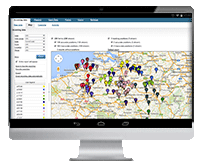
Here are a few aspects of mobility that these firms should demand from their mobile app.

What makes a great mobile logistics app?

Posted by

Enterprise mobility quickly evolved from an optional advantage to an absolute necessity, especially in the logistics sector. While trucking and transport companies weren’t particularly on board with providing drivers, facility managers and service technicians with mobile devices, the results of arming employees with proof of delivery apps, turn-by-turn navigation apps and vehicle inspection apps were overwhelming. All of a sudden, whole logistics organizations became dramatically more productive, safer and valuable on the market.

However, not all businesses in the logistics industry leveraged mobility in the right way. As Apps Tech News reported, organizations that simply port enterprise resource planning software or other solutions to mobile devices aren’t solving problems with mobility – instead they’re just making tasks mobile. According to the source, that is the primary reason why 71 percent of mobile projects only deliver “average or poor” returns on investment.

Rather than using desktop software on a mobile device, logistics firms need to deploy specific apps for workflows, ensuring that drivers and managers can send reports back to headquarters from the road or quickly inspect a vehicle.

What else should trucking, transport and logistics companies look for in enterprise mobility solutions and mobile workflow apps? Here are a few aspects of mobility that these firms should demand from their mobile apps.

Usability
At the end of the day, regardless of anything else, employees need to find mobile apps useful, as well as be able to use them with ease and minimal frustration. This means that the app must solve a specific problem, and it must also introduce a path of least resistance.
Managing logistics with complex, non-native apps creates headaches.

So, rather than developing a mobile app that does everything, logistics firms should choose mobile app development platforms that provide a loose framework on which any workflow can be applied. This ensures that managers have a tool specifically for them, such as a freight task management app. The same goes for drivers who will demand damage report apps that make that process simpler, not introduce a whole different level of accountability.

Integration
If mobile apps live alone in silos, this makes data collection, information sharing and collaboration much more difficult than it should be. Instead of porting an ERP to a mobile device, logistics firms should create proof of delivery apps and others that integrate with corporate platforms and software. This guarantees that mobile apps are put to good use, but it also ensures that administrators back at headquarters get to experience the productivity benefits of mobile solutions – they won’t have to manually file paperwork or enter data ever again.

“Mobile apps should be able to scan and read NFC and RFID chips.”

Features and capabilities
Logistics firms need mobile apps that support the wide range of technologies at their disposal, especially with the Internet of Things on the tech horizon. Simply put, mobile apps should be able to scan and read NFC and RFID chips, as well as allow employees to insert photographs of documents, objects or barcodes. This removes many steps in the data collection process, guaranteeing productivity gains.

Developer Tech highlighted the story of a team on the road which could authenticate account information by scanning a serial number with a smartphone camera. According to the source, that business’s employees became more efficient and productive as a result.

Offline support
It’s rare in the modern era to not have Internet connectivity, but the best logistics firms are always prepared. After all, if a mobile app doesn’t support offline productivity, it’s essentially useless in certain locations.

With offline support, employees can enter data wherever they don’t have Internet access, and that information will upload automatically. This ensures that employees are always working and are always able to complete their job.

Logistics firms will have a hard time finding mobile apps that support all these capabilities, which is why development platforms have become the coin of the mobility realm in recent years. Solutions such as Mobilengine meet these demands and more, making it the MADP of choice for logistics companies.


Security and guarding services can bring their forces into the 21st century by outfitting them with the perfect tool for multiple jobs: a mobile device with workflow apps installed.

Gearing up for security service demands

Posted by

At a time when every organization is restructuring their cybersecurity systems and data protection teams, private security and guarding headlines are often overshadowed by reports of data breaches and network intrusions. However, that doesn’t mean that this industry is doing poorly by any means. In fact, the U.S. private security market is on the rise, as more enterprises realize that physical assets are just as mission-critical as their digital counterparts.

In a recent study titled “Private Security Services,” researchers found that the demand for private security and guarding services in the U.S. will expand 5 percent in the next four years. Reasons for this market growth include concerns about crimes, as expected, but more enterprises are seeking outsourced security guard teams in order to monitor technological equipment in government buildings, schools and hospitals, the source noted.

“Equipment has an ‘enormous impact’ on how security officers work.”

Simply put, private security services need to improve the quality of their services if they want to compete in the U.S. market, as enterprises are certain to be picky when it comes to protecting their brands, employees and equipment. The good news is that these guarding and security firms can optimize their forces with new tools. After all, as Security Magazine reported, what equipment security officers are armed with has “an enormous impact” on how they work and how they are perceived by internal staff members and corporate outsiders.

Security and guarding services can bring their forces into the 21st century by outfitting them with the perfect tool for multiple jobs: a mobile device with workflow apps installed. So, let’s take a look at what equipment is popular in this sector, since many of those solutions can simply be replaced by a smartphone and access to Mobilengine apps.

Alarm monitoring
According to the report on private security, digital video surveillance systems and alarmed smart homes are increasing the demand for guarding and security squads that can protect and monitor this equipment. Alarms themselves will account for almost one third of all security service spending once 2019 rolls around, meaning that security guards need ways to keep track of their employers’ different alarms and surveillance systems. Furthermore, employees must be able to securely access alarm codes, so as to ensure that no one gains unauthorized access to data centers, offices and homes.

This is why arming security guards with mobile devices and mobile workflow apps is so important. Alarm access code apps, for example, make protecting corporate and personal assets easy while keeping data safe and secure from employees and staff members as soon as their shift ends. Security guards can use that app to receive alarm codes for a short period of time, allowing them to connect back to headquarters and verify their identities before being displayed.

Bring security forces into the 21st century with mobile devices and apps.

Equipment check-ins
As the importance of cybersecurity grows, more and more executives feel the need to physically protect data centers around the clock and secure end user computers overnight. The private security services report highlighted importance of using “highly trained guards” to do so, but maybe it’s more about the tools these employees have.

With security tour planning and security task management apps, however, security service providers can make anyone an elite task force capable of securing a variety of assets. These mobility solutions allow security guards to track their routes and report to headquarters when certain pieces of equipment or rooms are secured, ensuring that no stone is left unturned. Additionally, with RFID and NFC capabilities enabled in these mobile apps, administrators can monitor the progress of employees.

With a growing market comes competition, and as that’s current the case in the security and guarding services industry, these firms need to ensure that their guards and team members are prepared and armed with the latest gadgets and mobile workflow apps to successfully and satisfactorily complete their jobs.

Rising cost of safety leads logistics firms to mobile apps [Video]

Posted by

The Council of Supply Chain Management Professionals recently released the 26th annual “State of Logistics Report,” and all signs point to a costly 2014.

Hi, and welcome to the Mobilengine video blog!

This year’s “State of Logistics Report” from the CSCMP noted some trucking industry highs and low, and it seems that mobility can solve one of 2014’s biggest issues.

The report revealed that the total cost of U.S. business logistics rose 3.1 percent in 2014 compared to the year prior, with a majority of trucking companies citing spending related to new federal safety regulations.

The good news is that mobile logistics apps from Mobilengine can cut those costs and improve security.

The vehicle inspection app, for example, allows truck drivers to check on the quality of their transportation every day without hindering productivity, while a proof of delivery app can lower the cost of package insurance. Then there’s the navigation workflow app that ensures drivers always take the right routes, improving the safety of employees on the road.

Using smartphones to enter data, take photos or scan NFC chips will guarantee tasks are completed, which gives logistics firms peace of mind.

That’s all for today! Check back with Mobilengine for more mobility news and tips!

Trashing tradition in trucking with mobile apps and same-day invoicing [Video]

Posted by

The trucking and logistics industry has a revenue problem, and mobile workflow apps can solve it.

Hi, and welcome to the Mobilengine video blog!

When logistics companies think about mobility and providing their drivers with smartphones, productivity is often the first thing that comes to mind. However, the benefits of mobile workflow apps go far beyond efficiency improvements.

In fact, smartphones paired with proof of delivery apps can help logistics companies collect payments faster after successful delivery. Truck drivers just need to photograph any required documents, gather signatures via the touch-screen interface and send them immediately back to headquarters.

In an industry where companies usually wait between six and eight weeks to collect payments on deliveries, same-day invoicing and proof of delivery is revolutionary.

It all starts with a reliable mobile workflow app solution, and if same-day invoicing sounds intriguing to you, stick with Mobilengine for more mobility news, tips and facts!

Mobile fever is catching on, and now many health care professionals demand access to mobile devices and apps.

How can health care providers meet doctors’ demand for mobile apps?

Posted by

Doctors and nurses have been using technology for decades, but health care providers have yet to truly embrace the 21st century. At many hospitals and clinics, health care professionals rely on desktop computers and large immovable equipment. As a result, doctors and nurses must always return to a station or PC, collecting information on the next patient in their rounds tour before repeating the processes over and over again.

The good news is that mobile fever is catching on, and now many health care professionals demand access to mobile devices and apps. According to Research Now, only 16 percent of doctors, nurses and other health care employees currently use mobile health apps, but 46 percent of these individuals plan on using these technologies to provide better care in the next five years. It seems that medical professionals aren’t the ones that need convincing.

A demand and no capacity to meet it

Instead, health care providers are hesitant about developing their own mobile apps in house due to the sheer demand. Gartner reported that by the end of 2017, the demand for mobile apps will be five times bigger than internal IT teams’ ability to create new solutions for employees.

“Mobile app demand will be 5 times bigger than IT teams development capabilities.”

Gartner principal research analyst Adrian Leow explained that the cost to hire developers is only one hurdle that organizations must clear, with others ranging from the difficulty to create mobile health care apps to a lack of strategic planning when it comes to development. Compouding the issue is the demand for apps for every possible task. Nurses want ward round apps, administrators crave mobile patient admission apps, staff members need patient feeding and calories apps and doctors demand ICU/ITU apps.

The challenges to developing mobile health care apps has resulted in some organizations releasing no mobile apps at all.

“This is an indication of the nascent state of mobility in most organizations, with many organizations questioning how to start app development in terms of tools, vendors, architectures or platforms, let alone being able to scale up to releasing 100 apps or more,” said Leow.

Working with professionals

Health care providers can overcome their confusion in the initial phases of developing a mobility strategy. It just takes a little guidance and some help from mobile app development platform providers like Mobilengine.

As explained by Gartner, rapid mobile app development tools provide a great way to “bridge the gap between mobile app demand and supply,” as those in business roles can use these platforms to create solutions to actual problems in their organizations. For example, health care providers can take the time to determine what workflows can be supported by mobile apps. Tasks such as patient admission and discharge are perfect for mobile devices, while nurses will definitely demand a ward round app. Taking stock of what apps which employees want is a challenge in itself, let alone developing everything from ICU apps to early warning scoring apps.

Whether doctors and nurses want to use tablets or smartphones doesn't matter with Mobilengine's native mobile apps.Whether doctors and nurses want to use tablets or smartphones doesn’t matter with Mobilengine’s native mobile apps.



Developing those mobile apps in house is time-consuming and costly, but with support from Mobilengine, development will be more efficient and focused on improving core tasks in a hospital or clinic. Gartner noted that 55 percent of organizations work with companies like Mobilengine in a process called “mixed sourcing.” This is the best way to meet the demand of health care professionals, as the IT team has many other aspects of their internal systems to worry about. So, instead of spending a month developing a patient admission app, providers can spend a month working with Mobilengine’s experience developers and strategists to create a mobile health care app for every role.

Convincing the providers

It’s clear that doctors and nurses demand mobile apps, and solutions like Mobilengine’s make the development process for dozens of different health care tools possible to begin with. But health care providers need to see the value in allowing their employees to use mobile patient admission apps, ward round apps and many others that make their jobs easier.

So, let’s leave it at this: According to Research Now, 96 percent of health care professionals and mobile health app users agree that these solutions improve the quality of life – isn’t that what health care is about in the first place?

Security services: 2 Sides to the mobile productivity coin [Video]

Posted by

Mobility and productivity go hand in hand, but did you know that the benefits of going mobile in security and cash management impact more than just employees in the field?

Hi, and welcome to the Mobilengine video blog!

With more businesses opting for private security and guarding services in recent years, these firms are busier than ever.

To improve the productivity of employees and therefore do more in less time, the world’s largest security company G4S gave their staff members Android tablets and workflow apps for cash management, ATM audit processes and cash-in-transit monitoring.

The days of performing manual data entry are over, and inefficient processes are put to rest. Thanks to Mobilengine’s 100 percent offline capabilities and backend integration, security firms can reduce field administration by up to 60 percent, as employees collect data, take photos and check tourplans on their mobile devices.

But that isn’t the only benefit of mobile workflow apps. When employees can send data directly into corporate apps and databases, businesses can cut 40 percent of back-office administration duties.

With mobile app platform-as-a-service solutions such as Mobilengine, cash management firms save time and improve operational efficiency while in the office or out in the field.

Download our Security Case Study

Construction companies might be surprised to learn that by combining the cloud and mobile construction apps, they will be able to communication in real-time with little spending and far less development and integration time.

Construction mobility: There’s a live update app for that

Posted by

The construction industry is no stranger to innovation, but when it comes to technology, some firms are lagging behind on implementing cutting-edge solutions to problems that are far too common. While some organizations might fear the costs of upgrading, others are worried that deploying brand new systems could impede productivity, eating up valuable time that could be spent improving different processes.

Global Construction explained that some construction companies have certainly moved onto new and better technologies, but it isn’t rare for these businesses to still rely on legacy software and spreadsheets. These old systems are holding the industry back, and this is primarily due to the lack of real-time communication. In fact, the source highlighted the fact that the current reliance on archaic solutions only allows construction firms to collect data every four to six weeks.

“79% of construction firms said mobility is ‘important’ or ‘very important.'”

Saving the day with mobile
Construction companies might be surprised to learn that by combining the cloud and mobile construction apps, they will be able to communicate in real-time with little spending and far less development and integration time. The road to paperless administration is just around the corner for many firms, as mobile app development platforms such as Mobilengine allow construction businesses to digitize workflows with a mobile app to meet their every construction mobility need.

The good news is that many construction firms already have mobile strategies. According to a report from JBKnowledge, 72 percent of construction workers use a smartphone and around 50 percent use a tablet for work-related reasons. Their employers immediately noticed how useful mobile devices in the field can be, as over 79 percent of firms reported that mobility is “important” or “very important.”…

3 reasons why you need a rapid mobile app dev platform [Video]

Posted by

Fifty-six percent of mobile leaders said that it takes between 7 months and a year to build one mobile enterprise app.

Hi, and welcome to the latest Mobilengine video blog!

Common mobile enterprise app development techniques cannot keep up with the pace of business. Once a company identifies a problem that can be solved with a mobile app, employees can wait up to a year to be given a solution. But not with Mobilengine since it offers rapid development capabilities.

Here are three reasons why you need a rapid mobile app development platform.

One: Rapid mobile development platforms such as Mobilengine provide a simple SDK to design forms and workflows according to your business process. Once ready, you can launch them on your universal workflow app. This process requires 10 percent of the amount of the code when compared to native development solutions

Two: On the backend, the Mobilengine PaaS solution provides a fully functional management console, complete with monitoring tools and integration middleware. You don’t really have to code anything, instead only parametrize the backend to your organization and users. Instead of wasting time developing infrastructure, focus on your business.

Three: With a rapid mobile development platform like Mobilengine, once you are ready, you can immediately run your new mobile solution in the cloud, allowing you to scale your development.

Thanks for joining us, and stay tuned for more mobility news, tips and strategies from Mobilengine.

Now is a better time than ever to start deploying new and improved mobile workflow apps for your field sales teams.

Do’s and don’ts of field sales mobility

Posted by

Some industries are just perfect for enterprise mobility, and field sales is a great example of this. After all, these companies rely on a mobile workforce day in and day out. While some sales professionals travel in local communities, others must traverse borders. Regardless of either situation, these individuals need to remain in contact with headquarters, and in the modern era, phone calls aren’t the only form of interaction. Nowadays, sales professionals need access to customer relationship management software and enterprise resource planning systems, as well as timesheets, task lists and invoicing platforms.

The good news is that organizations with field sales teams have been using smartphones for years. However, these companies merely adopted mobility due to employee demand, when they should be tackling mobility as a challenge to increase sales, revenue and the success of the business as a whole.

Now is a better time than ever to start deploying new and improved mobile workflow apps. So, here are some do’s and don’ts of enterprise mobility in field sales….

MADP: The smartest approach to mobile enterprise app development [Video]

Posted by

This year, 82 percent of CEOs plan to invest in mobility.

Hi, and welcome to the Mobilengine video blog!

Enterprise mobility is no longer an option. However, the growing demand for enterprise mobile apps of all kinds has caused a schism between traditional and mobile app development. Now, the latest trend to solve that problem in enterprise mobility is leveraging mobile application development platforms such as Mobilengine.

The major difference setting MADPs apart is that platforms like Mobilengine offer a complete mobile development package.

Organizations can build, test, manage, sync, secure and deploy mobile workflow apps on the same platform with a universal app and backend. This means that companies can focus on their business rather than the understructure, mobile app management, security, synchronization and analytics. Without those requirements, businesses can create and deploy solutions in a tenth of the time of other solutions.

Furthermore, MADPs give developers flexibility when they create and customize mobile apps, perfectly splitting the difference between native development and off-the-shelf solutions.

With MADPs, developers have a single platform to create a variety of forms, development costs remain low, time to deployment is fast and there’s no constant maintenance required.

MADPs are the future of enterprise mobility, and with Mobilengine PaaS, you can empower your employees with mobile apps while remaining true to your business.

Subscribe to our email list

Follow:


Your business comes first, right?

So focus on your business, not software development.

Get a Demo

Széchenyi 2020

Pályázat